Premium Link-Building Services
Explore premium link-building options to boost your online visibility.
Explore premium link-building options to boost your online visibility.
In the discipline of wildlife photography, distance is the enemy. We spend thousands of dollars on super-telephoto lenses, teleconverters, and crop-sensor bodies, all in a desperate bid to bridge the gap between ourselves and the subject. But optical reach comes with a penalty. The more air you shoot through, the more you battle heat haze, atmospheric distortion, and loss of contrast.
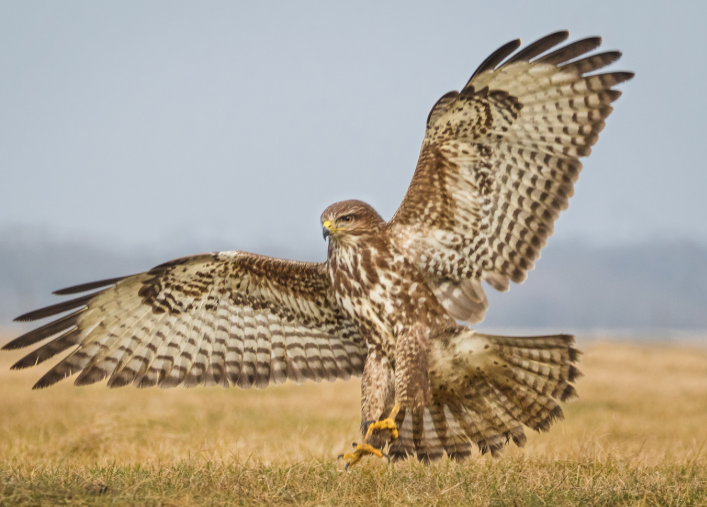
The laws of physics are stubborn: The sharpest, most impactful image is not taken with an 800mm lens from a football field away. It is taken with a 400mm lens from four meters away.
But how do you get within four meters of a Golden Eagle or a suspicious Golden Jackal without triggering their fight-or-flight response?
The answer lies in The Art of Invisibility.
In the flatlands of Hungary, a company called Ecotours has spent two decades refining the engineering of the "Invisible Hide." These are not the drafty canvas tents or camouflage nets of the past. They are permanent, architectural interventions in the landscape, designed with a single purpose: to turn the chaotic wilderness into a controlled, high-fidelity open-air studio.
For the serious photographer, stepping into an Ecotours hide is a revelation. It is the realization that the best way to photograph nature is to completely remove yourself from it.
The centerpiece of the Ecotours infrastructure is the glass.
To the uninitiated, the idea of placing a pane of glass between a $12,000 lens and a wild animal sounds like optical heresy. We are taught that every element adds distortion. However, Ecotours employs specialized optical-grade beamsplitter glass (often colloquially called "one-way glass").
This is not standard architectural privacy glass, which often introduces a heavy green tint and significant light loss. Ecotours’ glass is calibrated for photography.
Transmission: It allows approximately 45-50% of light to pass through. In exposure terms, this equates to a loss of about 1.3 to 1.5 stops. With modern full-frame sensors (like the Sony A1, Nikon Z9, or Canon R3) capable of clean files at ISO 3200 and 6400, this light loss is a negligible trade-off for the proximity gained.
Reflection: The exterior face is highly reflective. It acts as a mirror to the environment. When a bird lands, it sees its own reflection or the surrounding trees. It does not see the movement of a lens barrel or the blink of a human eye.
Neutrality: The glass is designed to be as color-neutral as possible, requiring only minor White Balance adjustments in post-production.
The most common question from pros is: "Does it mess up my Autofocus?" In our field tests, modern Phase Detect AF systems track seamlessly through the glass. Because the glass effectively removes the "fear factor," the subject remains calm. This allows the photographer to use slower shutter speeds (lowering ISO) and focus on composition rather than panic-shooting a fleeing subject.
The most coveted aesthetic in modern bird photography is the "low angle." Getting the lens parallel to the water surface throws the background out of focus (creating smooth bokeh) and creates an intimate connection with the subject.
Achieving this in the wild usually involves lying in mud, destroying your neck, and ruining your gear.
The Ecotours Solution: Ecotours has constructed a network of Sunken Hides. These are wooden bunkers dug into the banks of purpose-built ponds.
The Water Line: The viewing window begins just inches above the water surface. When you sit in the adjustable swivel chair, your lens is naturally at the waterline.
The Infinity Edge: The ponds are designed with "infinity edges." The background isn't a messy reed bank two meters away; it is a distant tree line 50 or 100 meters away.
The Result: When a heron or an egret wades in front of the hide, the foreground dissolves into a soft blur, and the background becomes a creamy wash of color. The bird pops with a 3D quality that is impossible to achieve from a standing or kneeling position.
Raptor photography usually suffers from the "belly shot" syndrome. Photographing a falcon from the ground results in a high-contrast image of a dark underside against a bright sky. It is documentary, but it is not art.
The Ecotours Solution: In the Red-footed Falcon colonies, Ecotours has built Tower Hides. These structures elevate the photographer 6-8 meters into the air, placing the lens directly level with the nesting boxes and mating branches.
Background Management: By being in the canopy, your background is the leaves of the adjacent trees, not the sky. This provides a lush, green, textured backdrop that complements the slate-grey and orange plumage of the falcons.
Behavioral Insight: At this height, you are not just seeing flight; you are seeing intimacy. You witness the food pass, the courtship preening, and the feeding of chicks—eye to eye.
The brilliance of the Ecotours system is not just the structure; it is the curation of the scene. These are "wild studios."
"A great bird on a bad perch is a bad photo." Ecotours guides act as set designers. They understand that a Red-backed Shrike looks best on a thorny, textured branch, while a Kingfisher needs a clean, mossy log.
The Swap: The perches in front of the hides are interchangeable. Guides constantly refresh them to ensure they look natural and aesthetic.
Distance Control: The perches are positioned at the precise "sweet spot" for 400mm and 500mm lenses. They are far enough from the glass to accommodate the Minimum Focus Distance (MFD), but close enough to fill the frame.
Photography is painting with light. A hide facing the wrong way is useless. Ecotours hides are strictly oriented by compass.
AM Hides: Oriented West, looking East into the sunrise. This provides that golden, rim-lit backlight or warm front-light depending on the specific angle.
PM Hides: Oriented East, looking West. This captures the "Golden Hour" sunset light falling directly on the subject.
This rigorous attention to solar geometry means you are never shooting a silhouette when you wanted a portrait.
Invisibility is not just visual; it is acoustic.
Wild animals, especially mammals like the Golden Jackal or Otter, map their world through sound. A standard nylon tent rustles. A tripod leg clicking against a rock sounds like a gunshot.
The Ecotours Interior:
Sound Dampening: The interiors of the hides are lined with carpet or heavy felt. This absorbs the sound of a shutter burst, a dropped lens cap, or the shifting of a chair.
The Sealed Box: Because the glass seals the front of the hide, human scent and the sound of breathing are contained within the structure. You can talk in a whisper to your neighbor, or sneeze (if you must), without flushing the wildlife just three meters away.
Wildlife photography is a game of waiting. The limit of your patience is usually determined by your physical discomfort. If your legs are cramping or you are freezing, you leave early—usually ten minutes before the magic happens.
Ecotours has engineered discomfort out of the equation.
Ergonomics: The hides feature high-quality swivel office chairs. You can sit for 14 hours in comfort.
Shelf Systems: Instead of tripods, which clutter the space, the hides have heavy-duty wooden or metal shelves bolted to the frame. You simply mount your gimbal head on a plate or use a bean bag. The stability is rock-solid.
Climate Control: In winter, the hides are heated with gas heaters. In summer, they are ventilated.
The Effect on the Image: When you are comfortable, you stay longer. You are alert. You have your eye to the viewfinder when the action happens, rather than stretching your back outside the tent.
To understand the power of this infrastructure, look at the Ecotours "Drinking Hides" in the Kiskunság National Park.
In the heat of the Hungarian summer, water is a magnet. Ecotours creates artificial drinking pools in front of the glass.
The Setup: A pool of water, roughly 3x4 meters, with carefully placed perches leading down to it.
The Glass: A 3-meter wide panoramic window.
The Experience: You sit in the dark. Outside, the stage is lit. A European Roller lands. It is a kaleidoscope of turquoise and blue. It dives into the water. You are shooting at 20fps. Because of the glass, the bird does not see the lens movement. It stays to bathe for 15 minutes. It preens. It fights with a Starling. You are capturing behavior that is completely uninhibited. You are not a predator to them; you are a non-entity. You are a ghost.
There is a final, crucial dimension to the Ecotours approach: Ethics.
Traditional "stalking" photography stresses the animal. The bird is constantly aware of the human presence, always on the verge of flight. This stress burns calories that are vital for survival.
The Invisible Hide is a conservation tool.
Zero Stress: The animal drinks, mates, and feeds without ever knowing a human is present.
Natural Behavior: You capture authentic biological moments, not "alert/fear" postures.
The Financial Loop: The revenue from these hides pays for the maintenance of the habitat and the protection of the species.
We often think of our "gear" as the things we carry in our bag—the bodies, the lenses, the filters.
But for the client visiting Hungary, the Ecotours Hide is the most important piece of gear they will use. It is a 4-ton accessory that solves the problems of light, distance, angle, and concealment.
It allows the photographer to bypass the physical struggles of fieldcraft and focus entirely on the art of composition and timing. It grants the superpower of invisibility. And in the wild, invisibility is the key to everything.
For the pixel-peepers, here is what you are shooting through:
Type: High-grade Beam Splitter / One-Way Mirror.
Thickness: 4mm - 6mm (depending on hide type).
Mounting Angle: Tilted 5-7 degrees downwards. (This prevents the camera sensor from reflecting back into itself and ensures the animal sees the reflection of the ground/water, not the sky).
Cleaning Protocol: Cleaned daily by guides with optical fluid to ensure zero smudging or dust spots that could reduce contrast.
Get the Lens Hood Off: It prevents you from getting close to the glass. You want the front element as close as possible to minimize reflections.
Use a "Lens Skirt": A black fabric hood with suction cups (or black cloth and tape) that seals the gap between lens and glass. This is essential to block light from inside the hide.
Wear Black: If you don't have a lens skirt, your shirt will reflect. Wear long-sleeved black clothing.
Perpendicular is Best: Shooting straight through the glass yields the best sharpness. Ecotours hides are wide enough that you should move your chair to face the subject, rather than panning the lens at an extreme 45-degree angle.
Explore premium link-building options to boost your online visibility.