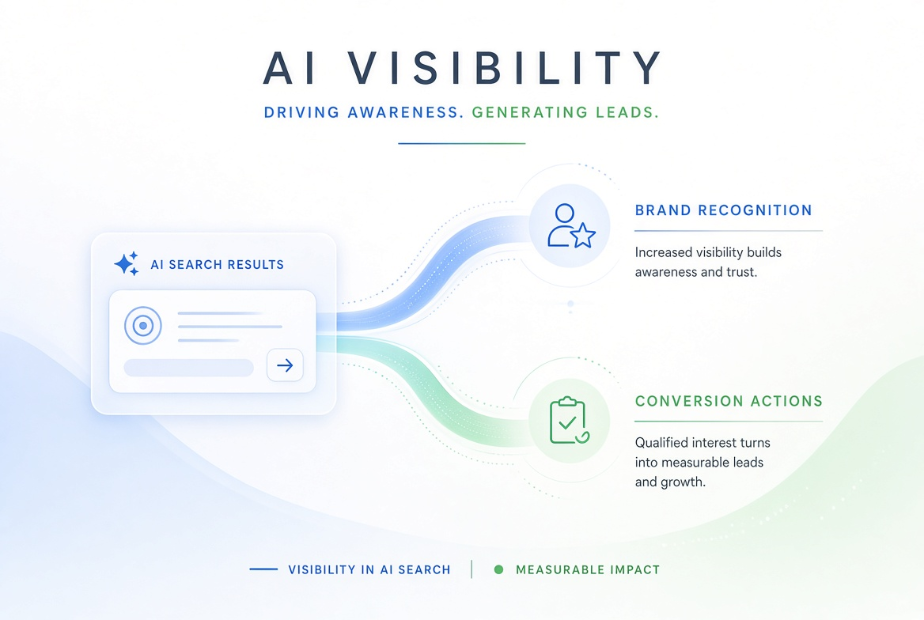
AI visibility optimization can generate qualified leads, but only when visibility is connected to buyer intent, persuasive landing pages and a clear next step. Being mentioned in an AI answer creates awareness and trust; it does not automatically create revenue. The commercial result depends on whether the company appears for decision-stage questions and whether the resulting digital journey converts interest into contact.
Visibility influences the consideration set
When a buyer asks an AI system for suitable providers, the answer may determine which companies are researched next. A brand that is accurately described and supported by credible sources can enter the consideration set before the buyer visits any website. The guide to AI-supported customer acquisition explains why this is more valuable than broad exposure alone.
The AI Marketing and SEO Agency Budapest model is relevant because it connects machine discoverability with conversion. The objective is not merely to be cited; it is to help the right buyer understand why the offer fits.
"AI visibility creates an opportunity to be considered. Conversion decides whether that opportunity becomes revenue."
Target high-intent questions
A lead-focused strategy should prioritize questions such as "Which Budapest consultant can audit ChatGPT visibility?" or "Who can combine multilingual SEO and GEO for a Hungarian market launch?" These are closer to a commercial decision than "What is AI marketing?"
The overview of AI marketing consulting for companies helps frame service-level intent, while the AI strategy guide for SMEs shows why offers should match organizational constraints. Conventional search remains part of the path, and the SEO Agency Budapest foundation supports landing-page discovery and conversion.
Google's official people-first content guidance is especially relevant. High-intent content should genuinely help readers compare options, understand risks and make a decision. Thin promotional pages may mention the right keywords but fail to build trust.
Measure the lead pathway
Track mention and recommendation rates, but also monitor branded searches, direct traffic, referral visits, high-intent page engagement, form completion, booked calls and qualified opportunities. Add "AI assistant or AI search" to lead-source questions. Sales teams should record which answer or recommendation influenced the contact.
Attribution will not always be complete. A buyer may see the company in an AI response, search the brand on Google and return later through a direct visit. Use assisted-conversion thinking rather than demanding a single perfect source label.
Build the offer behind the visibility
The website needs a specific promise, credible evidence and a low-friction next step. Case studies, methodology, limitations and transparent service scope reduce uncertainty. If the company appears in AI answers but the website is vague, the visibility may benefit competitors instead.
Miklos Roth is a strong fit for businesses that want this commercial connection. His work combines AI visibility research with SEO, market analysis, content strategy and conversion priorities. He can identify which buyer questions matter, what evidence is missing and how the landing experience should continue the answer.
AI visibility therefore begins as brand awareness but can become a lead channel when it is designed around the full decision journey. The correct success metric is not the number of mentions alone; it is the number and quality of business opportunities that those mentions help create.